Local software
Programs were normally installed from disks or discs. Their interfaces and data remained close to the user instead of being primarily account- and cloud-centred.
REAL ENVIRONMENT · 1998–PRESENT
A real Windows 98 computer still living on a modern network
HCL-RIW-PH-001
HCL-RIW-PH-002
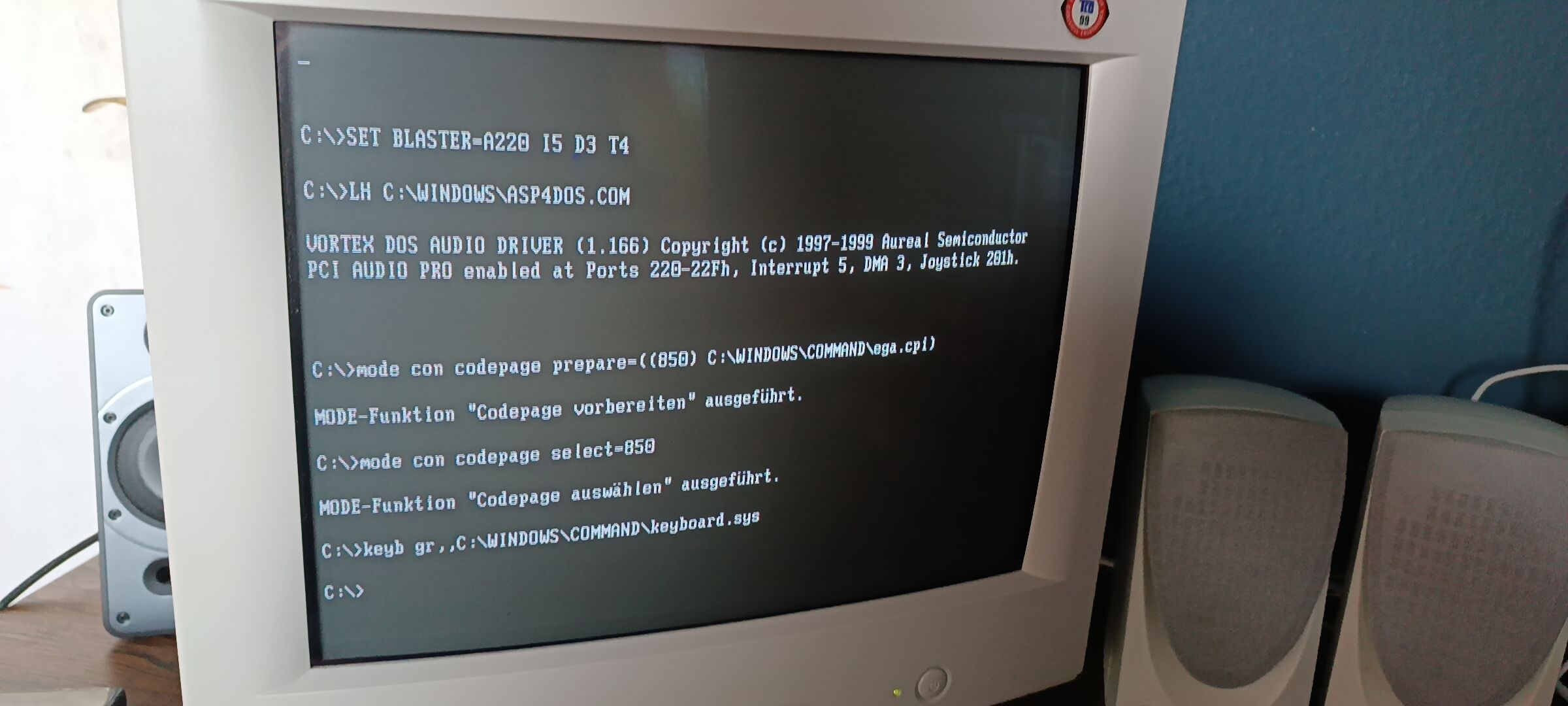
This photograph documents the real DOS startup sequence of the preserved Windows 98 workstation. The startup configuration itself forms part of the documented operating environment: it records how the physical machine prepares the software and hardware services used by the later Windows session.
Curatorial context
This workstation is not a recreated period scene, and the computer is not simply preserved as an inactive object. It remains operational in the author's Home Computing Lab. Windows 98 Second Edition, locally installed software, removable media and the surrounding peripherals are maintained as parts of one working historical system.
Unlike many museum computers, this machine can still communicate with modern Linux infrastructure through compatibility services built inside the author's homelab. Those controlled services bridge different generations of computing without exposing a legacy operating system directly to the modern internet. Preserving the operating environment—how software, media, peripherals and network services work together—is considered as important as preserving the hardware itself.
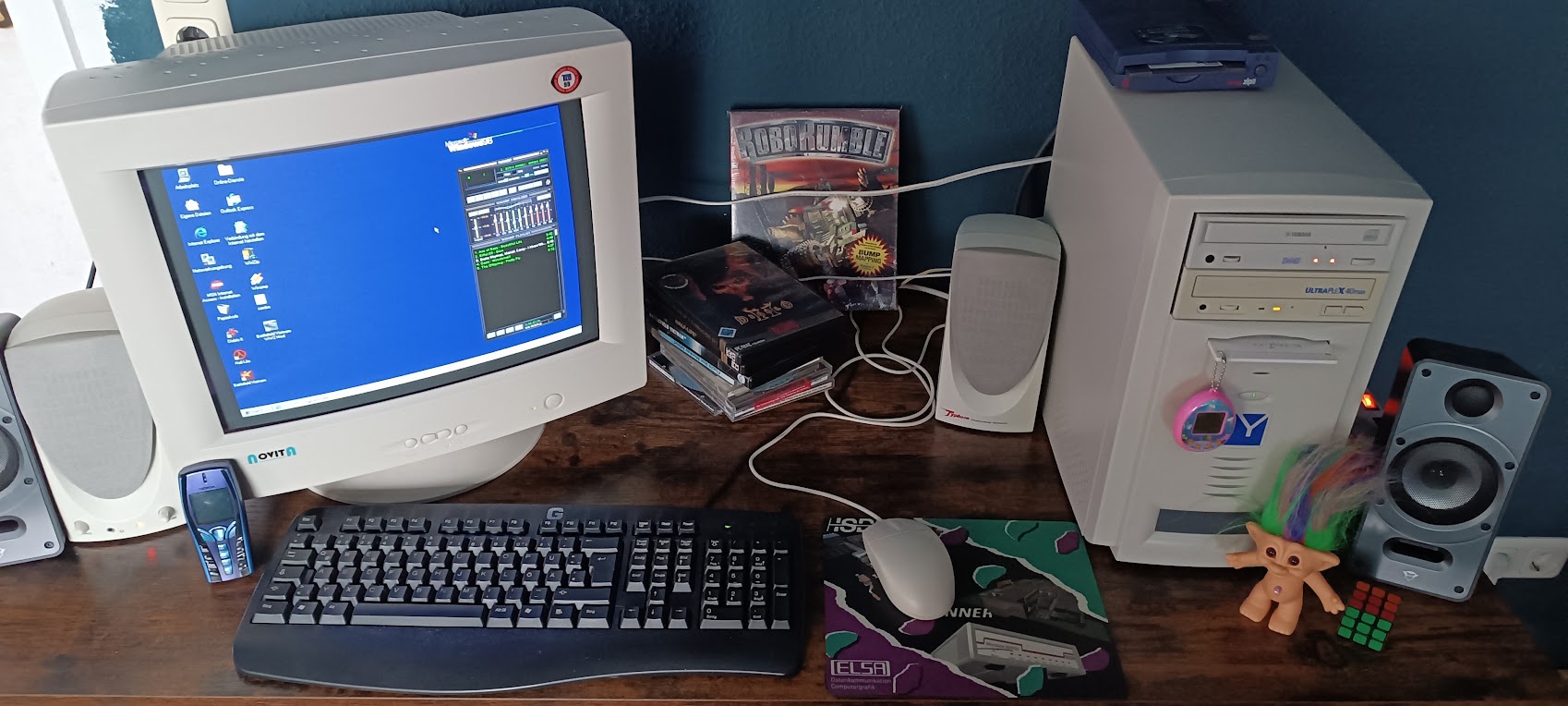
The photograph records the workstation exactly as it existed during documentation on 27 July 2026. The Nokia phone, CDs, Winamp display, Rubik's Cube, troll, speakers, mousepad and visible cables have not been removed or staged away. They are evidence of the machine's actual use and context, not decorative additions.
Its CRT-era workstation form, classic peripherals, locally installed software, ICQ 2000b and working Iomega Zip 100 MB drive make it a practical record of late-1990s and early-2000s desktop computing. Each physical detail helps explain an operating constraint: applications arrived on media, files lived on the machine, and communication depended on the hardware and services available around it.
Programs were normally installed from disks or discs. Their interfaces and data remained close to the user instead of being primarily account- and cloud-centred.
Removable media made transfer, backup and distribution tangible. Capacity limits shaped which files were practical to store or carry.
The workstation participates in a modern network through purpose-built compatibility services, while the legacy operating system remains protected from direct exposure.