A local frame for observations shaped by coast, moor, weather and regional culture.
Hometown Observer · local history
The Story of Wiesmoor
Moorland · Power · Flowers · East Frisia
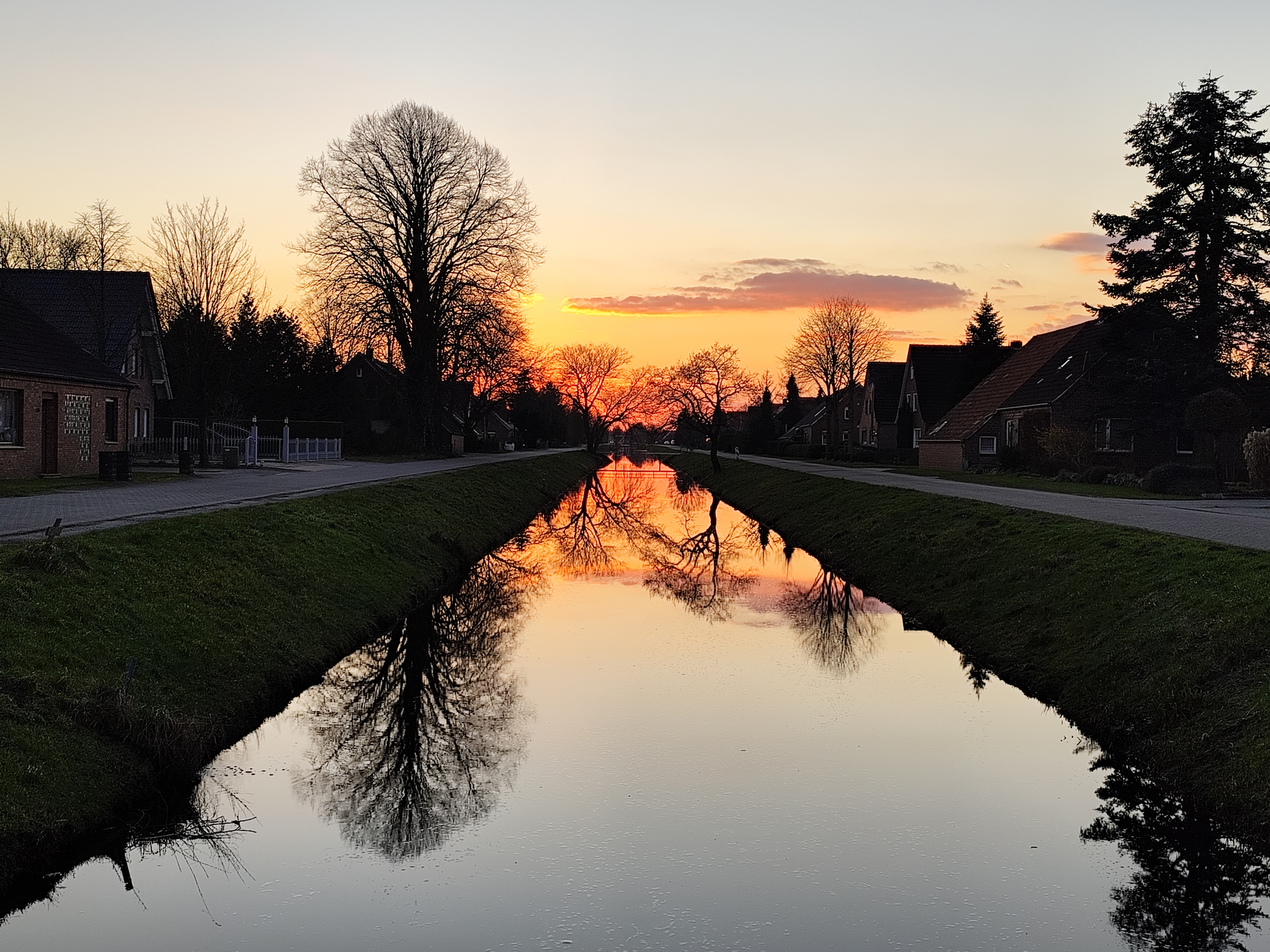
Wiesmoor is not observed from a distance.
Photographed just outside the author’s home.
About Wiesmoor
Wiesmoor is a town in East Frisia (Ostfriesland), Lower Saxony, Germany. Its history is shaped by raised bog cultivation, peat extraction, peat-fired electricity generation and its later identity as the Flower Town. That background explains why Wiesmoor became the local home of the Hometown Observer.
Wiesmoor belongs to north-west Germany's Lower Saxony context.
The town centre developed from an East Frisian central raised bog landscape.
Waste heat, greenhouses and horticulture shaped the later public identity.
Public, non-personal signals around weather, water, sky, peatland and environment.
Raised bog
Much of today's Wiesmoor belonged to the East Frisian central raised bog. For centuries, the landscape was difficult to access and only gradually settled from the edges inward. The modern town centre developed much later, shaped by industrial peat extraction and planned settlement.
Power
At the beginning of the twentieth century, the Prussian state decided to extract peat industrially from the raised bog between Aurich and Wilhelmshaven and open the area for settlement. The peat was intended to fuel a power station. The first residents settled in the still undeveloped Wiesmoor in 1907, and the peat-fired power station began operating in 1909. For decades, peat extraction, electricity generation, horticulture and agriculture formed the economic basis of the settlement.
Flowers
From 1925 onward, waste heat from the power station was used to heat greenhouses for vegetables and later ornamental plants. This link between energy and cultivation shaped Wiesmoor's later identity as a flower town. After peat-fired electricity generation ended and the old power station was replaced, Wiesmoor went through structural change, with horticulture, tourism and local services becoming more important.
Observer context
The Hometown Observer uses this local context to frame public, non-personal observations around weather, water, sky, peatland and environment.
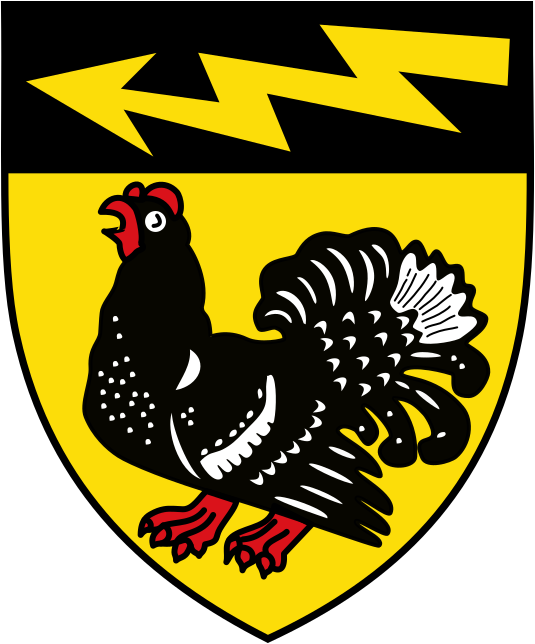
Why this crest?
The coat of arms compresses Wiesmoor's story into two symbols. The black grouse refers to the former raised bog landscape where the bird was once widespread. The golden lightning bolt points to electricity generated from peat and to the urban development that followed.
Flower Town
From waste heat to greenhouses, Wiesmoor's energy history became part of its flower-town identity.
Local history · Wiesmoor
The Story of Wiesmoor
Wiesmoor is not an old medieval town with a long row of ancient buildings. It is one of East Frisia's youngest towns, and its modern identity grew from a landscape that was once difficult to cross, difficult to cultivate, and dominated by raised bog. The place that is now Wiesmoor became a town through raised bog, peat, electricity, horticulture and structural change.

A town born from raised bog
For centuries, much of today's Wiesmoor belonged to the East Frisian central raised bog. The landscape formed a natural barrier between older settlement areas and remained largely undeveloped for a long time. Permanent settlement began first around the edges. The modern town centre, however, is much younger and was shaped by the industrial use of the bog in the early twentieth century.
At the beginning of the 1900s, the Prussian state decided to extract peat industrially from a large raised-bog area between Aurich and Wilhelmshaven and open it for settlement. The peat was not only a raw material; it was intended to become fuel for electricity generation. The first residents settled in the still undeveloped Wiesmoor in 1907.

Peat, power and settlement
In 1909, the peat-fired power station in Wiesmoor began operating. It became one of the decisive engines of the new settlement. Peat extraction, electricity generation, horticulture and agriculture formed a closely connected economic system for decades. Large quantities of peat were cut, dried and burned, while the settlement around the power station continued to grow.
This connection between landscape and technology makes Wiesmoor unusual in East Frisia. Unlike many older towns in the region, Wiesmoor's modern centre was not primarily shaped by medieval trade, church history or harbour life. Its origin is tied to industrial raised-bog development, heavy machinery, energy production and planned settlement.

From energy to flowers
The power station did more than produce electricity. From 1925 onward, waste heat from the plant was used to heat greenhouses for vegetables and later ornamental plants. This practical use of heat linked the energy system directly with horticulture. Over time, this connection helped shape Wiesmoor's identity as a flower town.
When peat-fired electricity generation ended and the old power station was replaced, Wiesmoor entered a period of structural change. The old system that had provided work through peat extraction, power generation and connected industries could no longer continue in the same form. Horticulture, tourism, services and local businesses became more important parts of the town's economy and identity.


Living with water, weather and landscape
Even after industrial peat extraction changed the area, the landscape did not disappear from the story. Canals, former bog areas, groundwater, rainfall, wind and local weather still shape how the region feels and functions. This is why Wiesmoor is a fitting home for the Hometown Observer. Local measurements are not just numbers; they describe a place whose history is tied to land, water, energy and cultivation.

Why this crest matters
The coat of arms compresses Wiesmoor's story into two symbols. The black grouse refers to the former raised bog landscape where the bird was once widespread. The golden lightning bolt points to the electricity generated from peat and to the development that followed. The crest is therefore not only decoration. It is a compact visual summary of Wiesmoor's transformation from raised bog to energy settlement to flower town.
Why this page exists
This page is not meant to be a tourism brochure. It exists to explain why Wiesmoor has a place inside the World Observer project. Most World Observer modules look outward: at public internet signals, media language, technology, space weather or global infrastructure. The Hometown Observer looks inward, at one small place in East Frisia.
That local focus gives the data context. A Wiesmoor weather snapshot, a future water indicator, a sky observation or a peatland note becomes more meaningful when the place behind it is understood. Wiesmoor is a useful local anchor because its history connects environment, energy, settlement and public life in a unusually visible way.
Observer notes · verified historical milestones
Timeline
- settlementFirst residents settle in the undeveloped Wiesmoor.
- powerPeat-fired power station begins operation.
- horticultureWaste heat from the power station is used for greenhouse cultivation.
- transitionPeat-fired electricity generation ends; the old power station is replaced.
- health resortWiesmoor is recognised as a climatic health resort.
- town statusWiesmoor receives town status.
Sources
Photography © 2026 Dennis Hilk. All photographs on this page were taken by the author in and around Wiesmoor.